Inhaltsverzeichnis
R-902
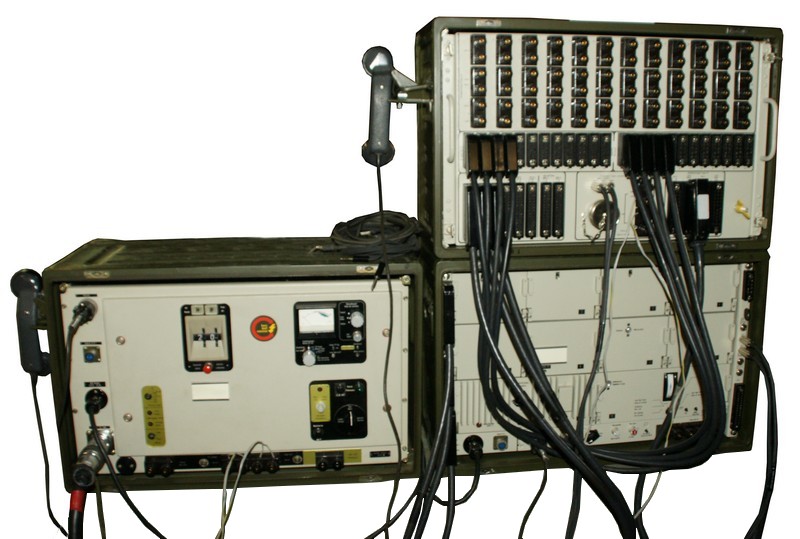
Microwave relay station R-902, MT 4; manufactured by Brown Boveri & Cie., Baden.
From 1963 to 1967, Brown Boveri in Baden developed a small microwave relay station, which was much easier to transport than the bulky UKR and, thanks to its much simpler operation, was finally suitable for use by the troops. With its introduction with the troops around 1970, the unloved TLD / SE-213, which was not suitable for multi-channel use without a multi-channel adaptor, could finally be liquidated.
Technical data
- Principle: transceiver (microwave relay station)
- Frequency range: 7.780 - 8.099 GHz, 40 channels with 1 MHz spacing
- Transmission power: FM (F3) 50 mWatt
Power supply
- Mains operation: 220 V AC mains
- Batteries: Alk. Accumulators
Dimensions
- mm, kg
Accessories
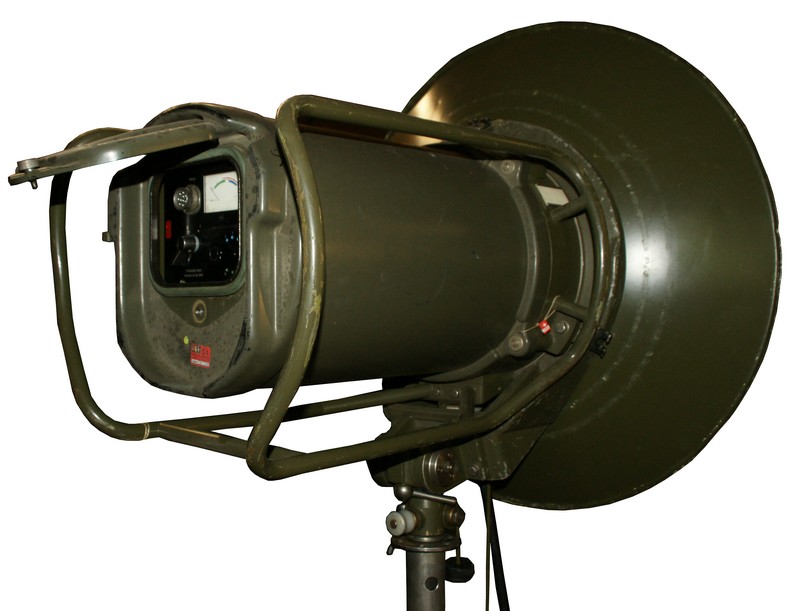
- The transmitter final stage is integrated into the parabolic antenna.
- The MK4/5 carrier frequency system from Siemens-Albis was used as a multi-channel adaptor; in addition to one service communications channel, four speech channels can be transmitted simultaneously. With a second MK4/5, the capacity can be expanded to eight speech channels.
Operation
The R-902 station consists of the control unit with frequency processing, the transmitter final stage, which is integrated in the back of the head behind the parabolic transmitting antenna, and a MT4/5 multi-channel unit for four telephony channels.
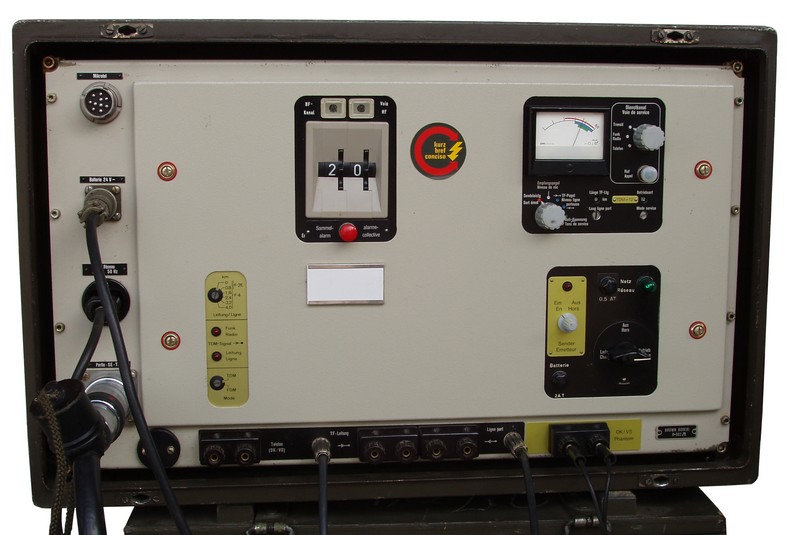
The MK-5/4 multi-channel set for four telephony channels was replaced by the MK-7 when the station was digitised in 1985. With this, 15 voice or data channels could be combined into a bundled signal using time-division multiplexing, which could then be transmitted with the R-902.
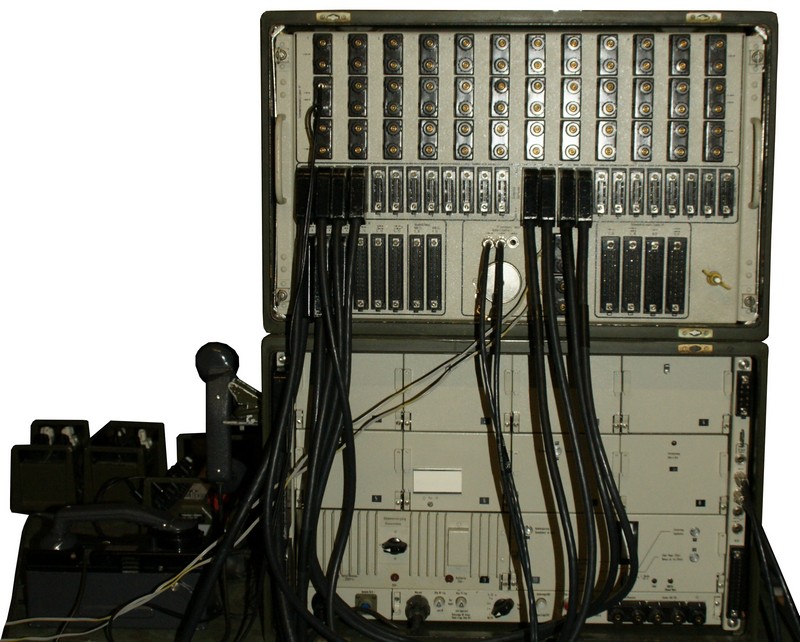
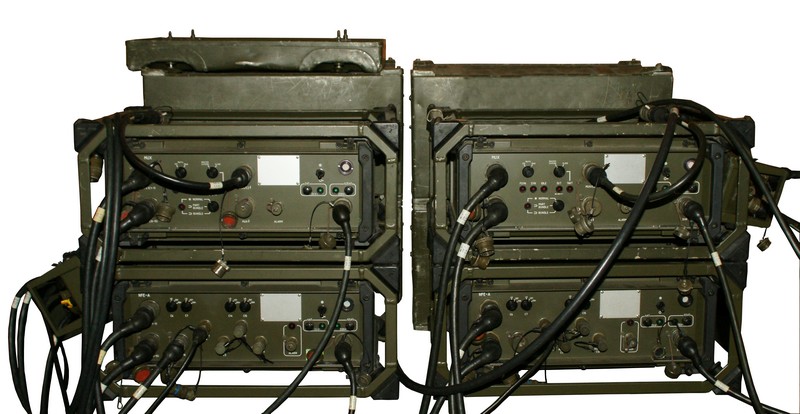
At the same time, the CZ-1 encryption unit was finally introduced in 1985, thanks to which secured microwave relay connections were possible with the R-902.
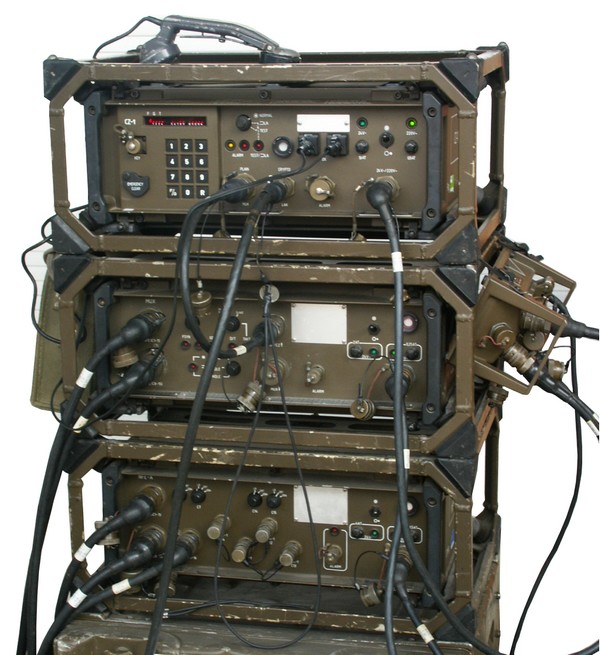
Relay connections could be realised with two R-902s, in some cases half of the calls could be branched off using two MK-5/4 multi-channel devices and the four channels were handed over to another microwave relay path.\
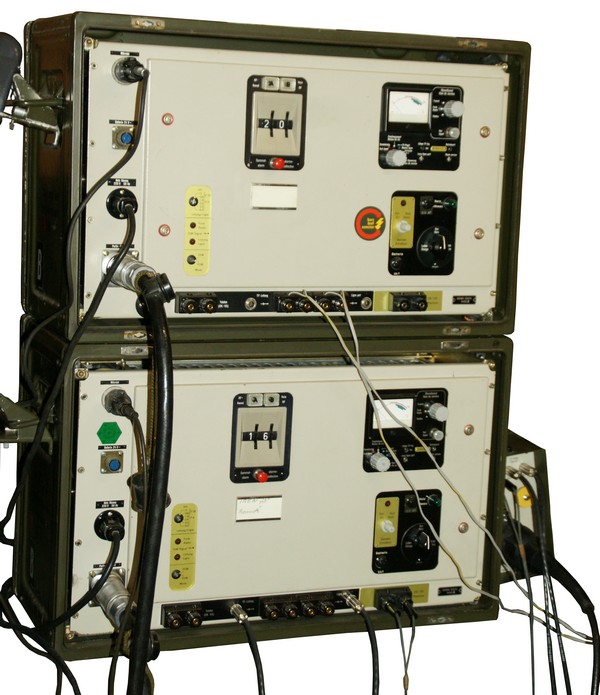
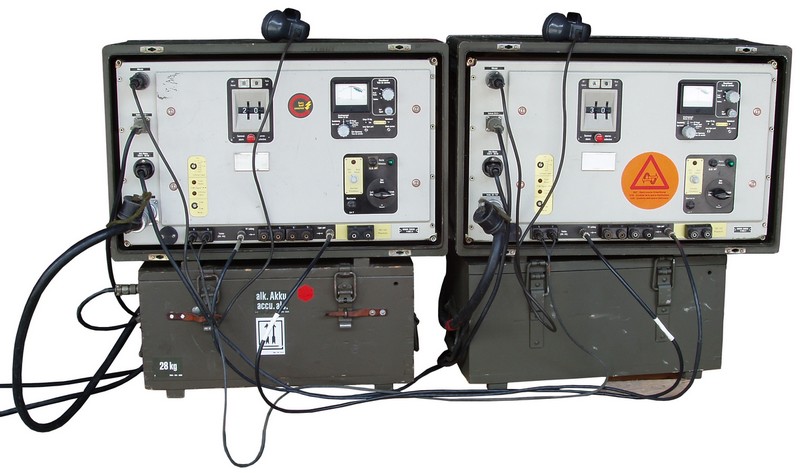
Technical principle
Tube assembly
Development
After the first development steps with a tube-equipped 6 GHz station around 1960, Brown Boveri began developing a compact mobile microwave relay station in 1963. The MT4 military station operates in the 8 GHz range and is based on the MT3 civilian station, which operates in the 7 GHz range.
As the forty switchable channels have to be within a narrow frequency range due to the filters and oscillators used, different variants with non-overlapping frequency ranges were developed.
- R-902/1: Ranges 7780 - 7819 / 7940 - 7979 MHz, used by units of army corps, divisions and brigades
- R-902/2: Ranges 7820 - 7859 / 7980 - 8019 MHz, used in the Ter Zones
- R-902/3: Ranges 7860 - 7899 / 8020 - 8059 MHz were not used in Switzerland
- R-902/4: Ranges 7900 - 7939 / 8060 - 8099 MHz, used at army command level
The station went into production in 1967 and was introduced with the troops around 1970; around 1988/92 it was upgraded with digitalisation of the station and the introduction of a new MK-7 multi-channel adaptor (made by Hasler/Philips) and the CZ-1 crypto unit (BBC). (BBC), so that classified connections were now possible.
Deployment
Until 1978, 1000 units were procured, the improved station was in use until 2005 and was then liquidated after being replaced by the R-905 station.


